Small Bedroom Layout Ideas With a Queen Bed (7 Layouts That Actually Work)
A queen bed is 60 x 80 inches. In a 10×10 bedroom, that’s half the room — before you add a single nightstand.
If you feel like you’re living inside your mattress, the problem isn’t the bed. It’s the layout.
This guide gives you 7 tested floor plans for rooms from 8×10 to 12×12 — with exact measurements showing where to place the bed, nightstands, and dresser — plus the #1 mistake that’s stealing your space.
📌 Save the floor plan diagrams — pick the one that matches your room and rearrange this weekend.
The #1 Bed Placement Mistake (And Why Everyone Makes It)
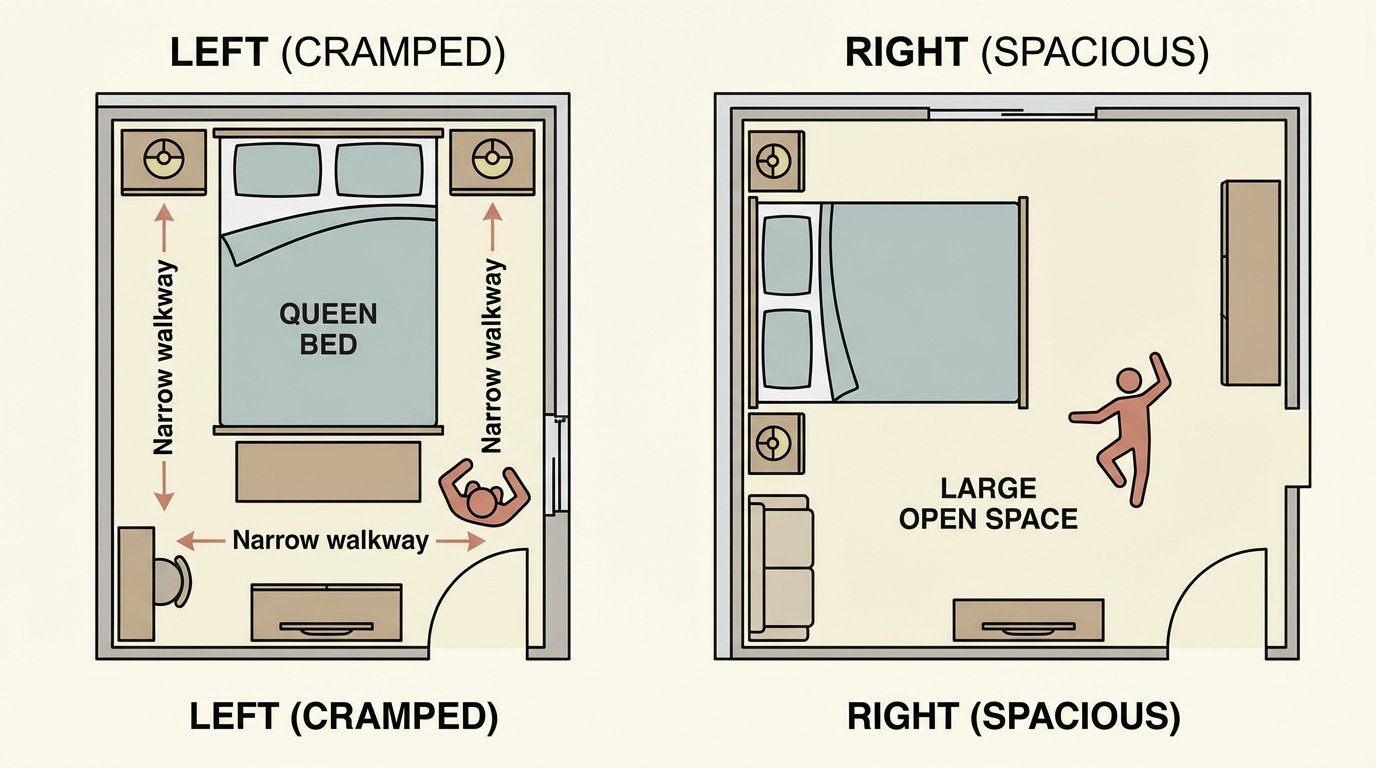
The mistake: Centering the bed on the longest wall with matching nightstands on both sides.
In a small room, this wastes walkway space on BOTH sides of the bed. You end up with two cramped 18-inch paths instead of one generous 48-inch open space.
The fix: Push the bed to one wall (with one nightstand or floating shelf) and reclaim 2-3 feet of usable floor space.
When to center: ONLY if your room is 12×12 or larger.
For more space-maximizing tricks, see our guide on how to make a small living room look bigger — the same principles apply.
Bed Placement Decision Tree
Not sure where to put your bed? Answer these questions:
1. Where are your windows?
- Behind bed → Classic placement, use a low headboard so you don’t block light
- Side wall → Bed perpendicular, you gain light without glare
2. Where’s the door?
- Opposite wall → Bed faces door (ideal flow, feels spacious)
- Adjacent wall → Bed perpendicular to door
3. Where’s the closet?
- Same wall as door → Bed on the far wall
- Opposite wall → Leave 36″ clearance for closet doors to open fully
💡 This decision tree removes the guesswork. Start with window position, then door, then closet.
7 Floor Plans for Small Bedrooms With Queen Beds
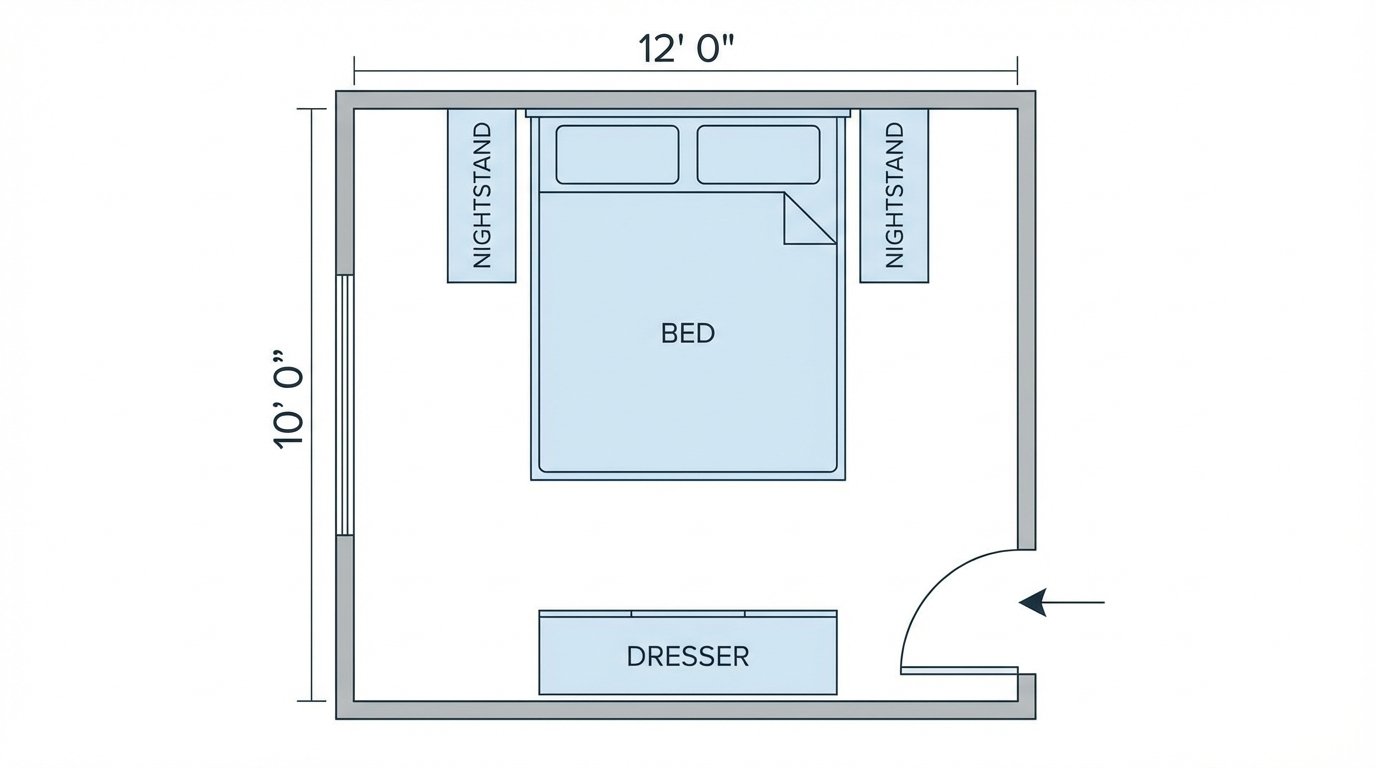
Layout 1 — The Classic (10×12 or larger)
Best for: Rooms with the door on a side wall
Setup:
- Bed centered on the longest wall
- Two slim nightstands (18″ wide max)
- Dresser on the opposite wall
- Minimum 24″ clearance on each side
When to use: Your room is 10×12 or bigger and you want that hotel-symmetry look.
Layout 2 — The Wall Hugger (10×10 or smaller)
Best for: Rooms under 100 sq ft
Setup:
- Bed pushed to one wall (headboard against wall)
- One nightstand on the open side only
- Open floor space on the other side (30″+ reclaimed)
- Dresser or desk on the opposite wall
Why it works: You trade a second nightstand for 30+ inches of usable floor space. That’s the difference between cramped and comfortable.
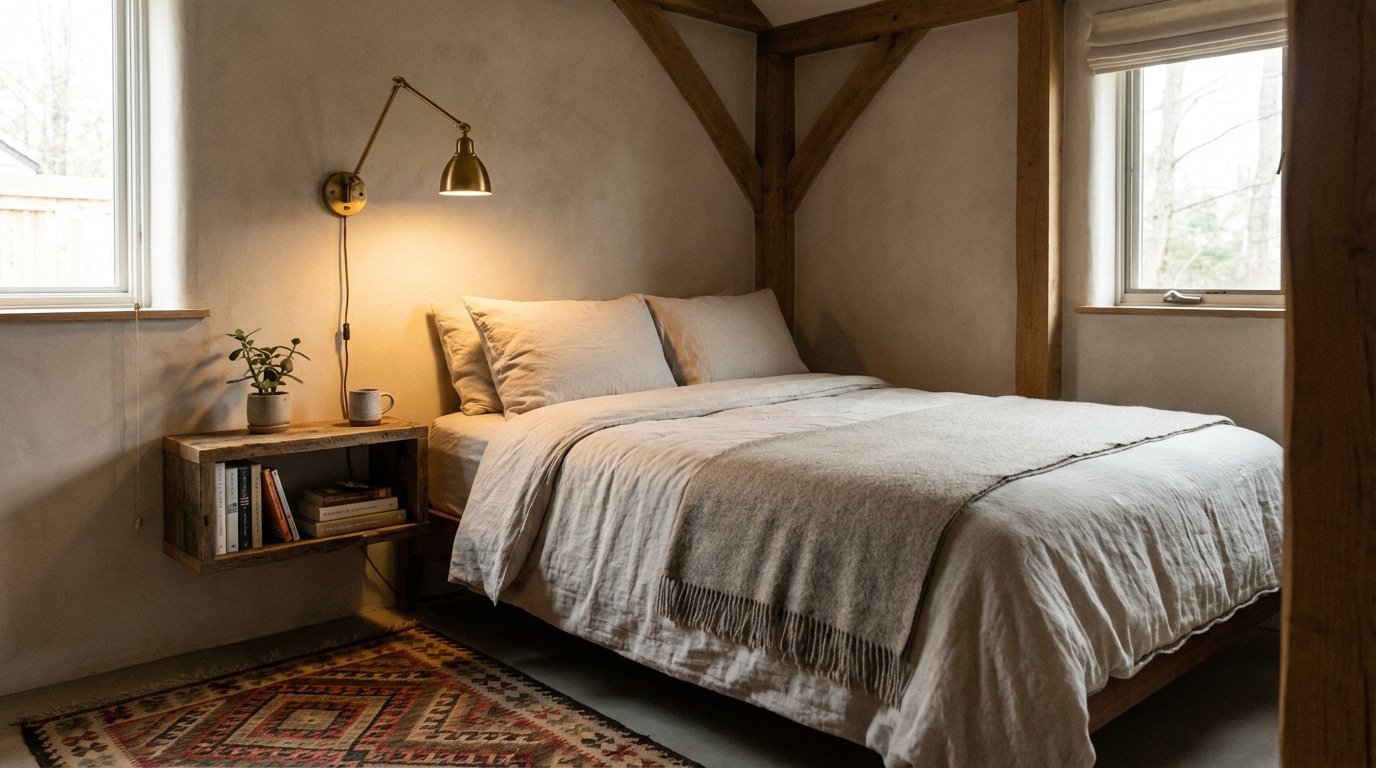
Layout 3 — Corner Queen (8×10 or smaller)
Best for: The smallest rooms
Setup:
- Bed in corner, headboard touching two walls
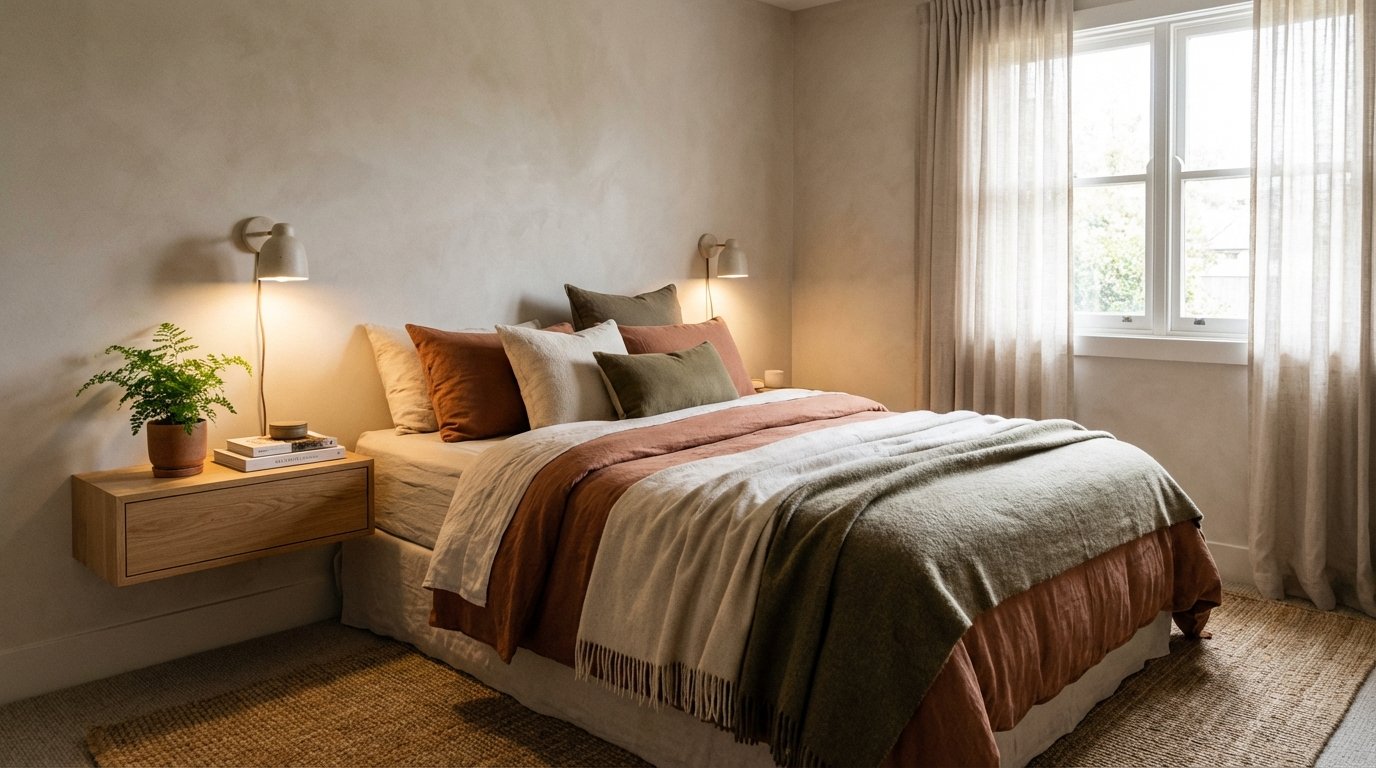
- Floating shelf as nightstand on the exposed side
- Wall-mounted lamp (no floor space for a lamp)
- All remaining furniture on the opposite wall
Pro tip: This layout feels coziest. Lean into it with warm bedding and a soft rug.
You can still make your bedroom feel like a hotel even in the smallest spaces — it’s about bedding quality and styling, not square footage.
Layout 4 — Window Headboard (any size)
Best for: Maximizing wall space for other furniture
Setup:
- Bed under the window
- Low headboard or no headboard
- Floor-length curtains on both sides of bed
- Dresser or desk on the wall that would have held the bed
Pros:
- Maximizes solid wall space
- Light behind the bed can be beautiful
- Curtains create softness
Cons:
- Drafts in winter (solution: thermal curtains)
- Morning light in your face (solution: blackout curtains)
Layout 5 — The L-Shape (10×12)
Best for: Multipurpose bedrooms (sleep + work)
Setup:
- Bed on the long wall
- Dresser on the short wall, perpendicular
- Small desk or vanity in the L-shaped space
- Creates a “zone” for work/sleep separation
When to use: You need your bedroom to do double duty as a workspace.
If you need more workspace than a corner desk provides, see our guide to closet office ideas for converting unused closet space.
Layout 6 — Floating Bed (10×10+)
Best for: Creating visual breathing room
Setup:
- Bed “floats” 12-18 inches away from the wall
- Narrow console table or shelf behind the headboard
- Storage baskets under the console
- Bedside access from both sides
Why it works: Pulling the bed away from the wall creates visual depth. The space behind becomes storage or display, not wasted.
The trick: Use a low headboard so you can see over it from the door — this keeps the room feeling open.
Layout 7 — The Diagonal (10×10+ square rooms)
Best for: Perfectly square rooms that feel boxy
Setup:
- Bed placed diagonally in a corner
- Headboard in the corner, foot pointing toward opposite corner
- Creates two triangle spaces on either side
- Use one for nightstand, one for a plant or chair
The effect: Unconventional but dramatic. The diagonal line breaks up the boxy feel of a square room.
Not for everyone, but stunning when it works.
Nightstand Alternatives for Tiny Bedrooms
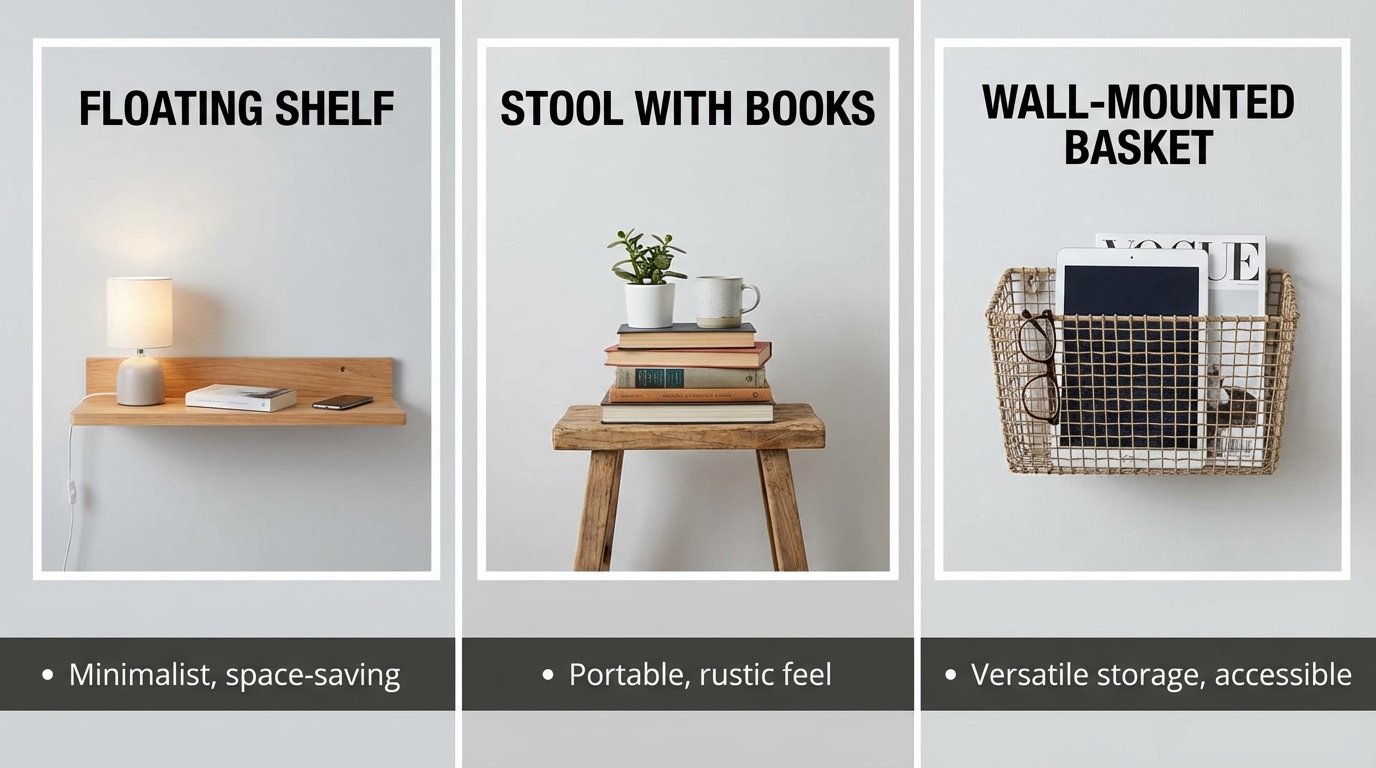
When traditional nightstands don’t fit (you need 24″ minimum clearance), try these:
| Alternative | Cost | Floor Space Needed |
|---|---|---|
| Floating shelf (8-12″ deep) | $8-15 | 0″ — wall-mounted |
| Wall-mounted fold-down table | $15-25 | 0″ when folded |
| Stool or stack of books | $0 | 12″ x 12″ |
| Headboard with built-in shelf | $40-80 | 0″ — part of bed |
| Over-bed caddy | $15 | 0″ — hangs on bed frame |
| Command hook basket | $5 | 0″ — hangs on wall |
For more nightstand inspiration, see our guest bedroom essentials checklist which covers nightstand styling in detail.
Small Bedroom Furniture That Actually Fits
| Furniture | Standard Size | Small Room Alternative | Savings |
|---|---|---|---|
| Nightstand | 24×18″ | Floating shelf 12×8″ | 75% footprint |
| Dresser | 60×18″ | Tall narrow chest 30×16″ | 50% footprint |
| Full mirror | Floor mirror 60×18″ | Over-door mirror | 100% floor space |
| Desk | 48×24″ | Wall-mounted fold-down | 100% when folded |
| Bench | 48×16″ | Ottoman with storage | Same + storage |
For budget-friendly furniture options, see our budget home makeover under $500 guide.
Quick Measurement Reference
Queen bed dimensions: 60″ wide x 80″ long
Minimum clearances:
- Walkway: 24″ (30″ is comfortable)
- Closet door clearance: 36″
- Between bed and wall: 18″ minimum for sheet-changing
Room sizes that work:
- 8×10: Use Layout 2 or 3 only
- 10×10: All layouts except Layout 1
- 10×12: All layouts work
- 12×12+: You have options — center the bed if you want
FAQ: Small Bedroom With Queen Bed
How do you arrange a queen bed in a small bedroom?
Push the bed against one wall instead of centering it. This reclaims 24-36 inches of floor space. Use one nightstand (or floating shelf) instead of two. Place the dresser on the opposite wall. For rooms under 100 sq ft, try the corner layout with the headboard touching two walls.
What is the minimum room size for a queen bed?
Technically 8×10 feet (80 sq ft), but you’ll need to push the bed against one or two walls. For a centered bed with nightstands on both sides, you need at least 10×12. A 10×10 room works best with the bed pushed to one wall.
Should a queen bed go against the wall?
In rooms under 120 sq ft, yes. Pushing the bed against the wall reclaims 24-36 inches of floor space. You sacrifice bedside access on one side, but gain a walkable room. Use a floating shelf or wall-mounted lamp on the wall side.
How do I make a small bedroom with a queen bed look bigger?
1) Push the bed against a wall to maximize open floor, 2) Use a low headboard (tall headboards visually shrink the room), 3) Mount lights on the wall instead of using floor/table lamps, 4) Keep nightstands slim (under 18″ deep), 5) Use light bedding and a mirror to reflect light.
Can you put a queen bed in a 10×10 room?
Yes, but you’ll need to push it against one wall. A centered queen bed in a 10×10 leaves only 30″ on each side — that’s walkway space, not living space. Push it against a wall and you get 60″ of open floor. Use Layout 2 or 3 from this guide.
What to Read Next
- 👉 Hotel vibes: How to make your bedroom feel like a hotel
- 👉 Sleep science: Bedroom colors for better sleep
- 👉 Small space solutions: Small space decorating ideas
- 👉 Budget refresh: Budget home makeover under $500
📌 Save the 7 Floor Plan Diagrams — pick the one that matches your room and start rearranging this weekend.