Bedroom Color Schemes for Better Sleep (Science-Backed Guide)
3 Hook Options
- You’ve tried melatonin. You’ve tried the sleep app. You’ve tried the weighted blanket. But have you looked at your walls?
- People who sleep in blue bedrooms average 7 hours 52 minutes of sleep. People in purple? 5 hours 56 minutes. The color matters more than you think.
- I’m going to cite actual studies. Then I’m going to tell you exactly which paint to buy.
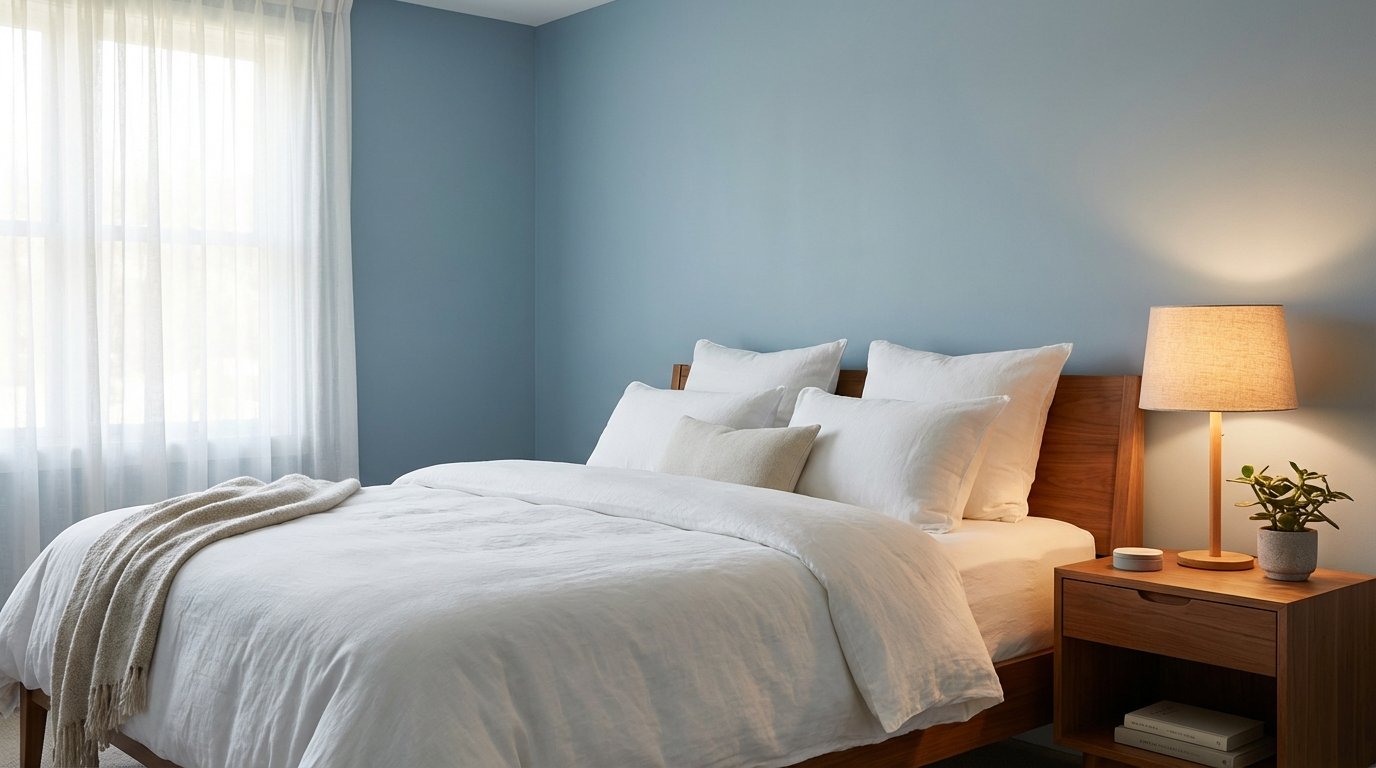
Hero Image: Serene blue bedroom — soft blue walls, cream bedding, warm wood, warm lamp light. Calming, drowsy, beautiful. Photorealistic.
You’ve tried melatonin. You’ve tried the sleep app. You’ve tried the weighted blanket. You’ve even tried the fancy pillow. But have you looked at your walls?
Research from Travelodge shows people who sleep in blue bedrooms average 7 hours 52 minutes of sleep per night — almost an hour more than those in purple rooms, who average just 5 hours 56 minutes.
That’s not a small difference. That’s the difference between waking up refreshed and waking up exhausted. Every single night.
The science is clear: color affects your autonomic nervous system. Some colors lower heart rate and blood pressure. Others stimulate and energize. Your bedroom should be doing the former, not the latter.
In this guide, you’ll learn which colors clinically promote better sleep (and which sabotage it), get 6 complete bedroom color palettes with specific paint names, and understand the science behind WHY color affects your sleep — not just someone’s opinion.
The Science of Bedroom Color and Sleep
Let’s start with the research:
The Travelodge Study (2,000 homes):
- Blue bedrooms → longest average sleep (7h 52m)
- Yellow bedrooms → second place (7h 40m)
- Green bedrooms → third place (7h 36m)
- Purple bedrooms → worst sleep (5h 56m)
Color psychology research shows:
- Cool colors (blue, green, lavender) lower heart rate and blood pressure
- Warm colors (red, orange) increase alertness and stimulation
The biological mechanism:
Your eyes have special ganglion cells sensitive to blue wavelength light. Blue walls create a calming response through these receptors — different from blue SCREEN light, which keeps you awake.
> Important distinction: Blue walls calm you. Blue SCREEN light keeps you awake. Different mechanisms entirely.
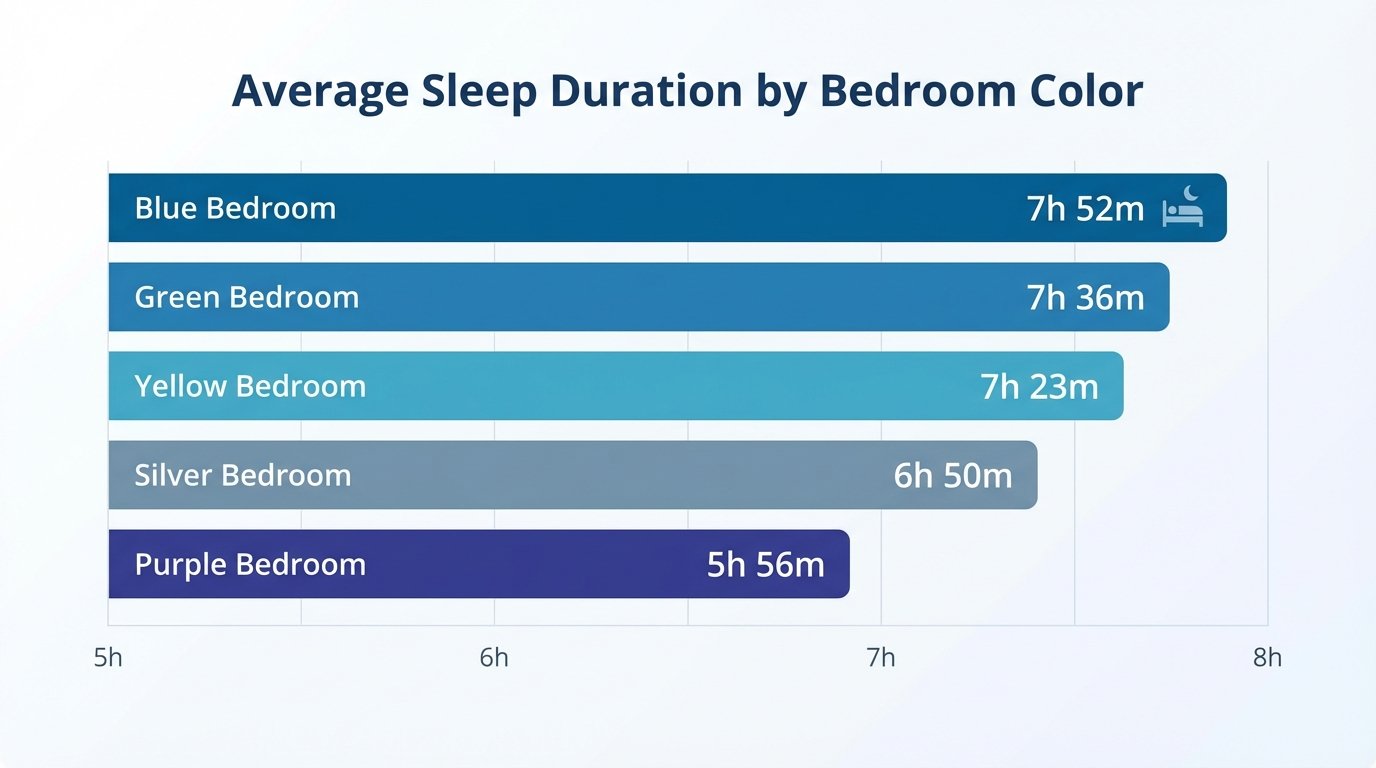
Image: Infographic — sleep duration by bedroom color (bar chart: blue 7h52, yellow 7h40, green 7h36, silver 7h33, orange 7h28, red 6h58, purple 5h56). Clean, data-visual.
For the best results, complement your color choice with the right bedroom layout to create a truly restful space.
Best Bedroom Colors for Sleep (Ranked)
1. Blue — The Champion
Blue lowers heart rate and blood pressure. It’s the most sleep-promoting color according to research.
Best shades: Muted, dusty, or navy — not bright primary blue
Paint picks:
- Benjamin Moore Quiet Moments
- Sherwin Williams Sleepy Blue
- Farrow & Ball Lulworth Blue
Why it works: Blue triggers the parasympathetic nervous system (rest and digest), reducing the stress response that interferes with sleep.
2. Green — Nature’s Neutral
Green is calming without being cold. It’s associated with nature, growth, and renewal.
Best shades: Sage, olive, soft forest — not lime or bright kelly green
Paint picks:
- Sherwin Williams Evergreen Fog
- Benjamin Moore Sage Tint
- Farrow & Ball Mizzle
Why it works: Green is the color our eyes process most easily, causing the least strain. This reduces mental fatigue.
3. Warm Neutrals (Beige/Cream) — Safe and Grounding
Warm neutrals are the safest choice if you’re color-hesitant. They’re warm, grounding, and never distracting.
Best shades: Warm beige, cream, soft taupe — not stark white
Paint picks:
- Sherwin Williams Alabaster
- Benjamin Moore White Dove
- Farrow & Ball Pointing
Why it works: Warm neutrals don’t stimulate or suppress. They create a calm, consistent backdrop.
4. Lavender/Soft Purple — Calming IF Muted
Light lavender can be calming, but saturated purple is the worst color for sleep according to the research.
Best shades: Muted, grayed-out lavender — not bright purple
Paint picks:
- Benjamin Moore Organdy
- Sherwin Williams Potentially Purple (muted)
Warning: Avoid saturated or jewel-toned purple entirely.
5. Muted Yellow — The Surprise
Muted yellow creates warmth without stimulation. It’s surprisingly effective for sleep.
Best shades: Butter, cream, soft gold — not bright sunshine yellow
Paint picks:
- Benjamin Moore Mannequin Cream
- Sherwin Wheels (very soft)
The wrong yellow: Benjamin Moore Yellow Highlighter — too bright, too stimulating.
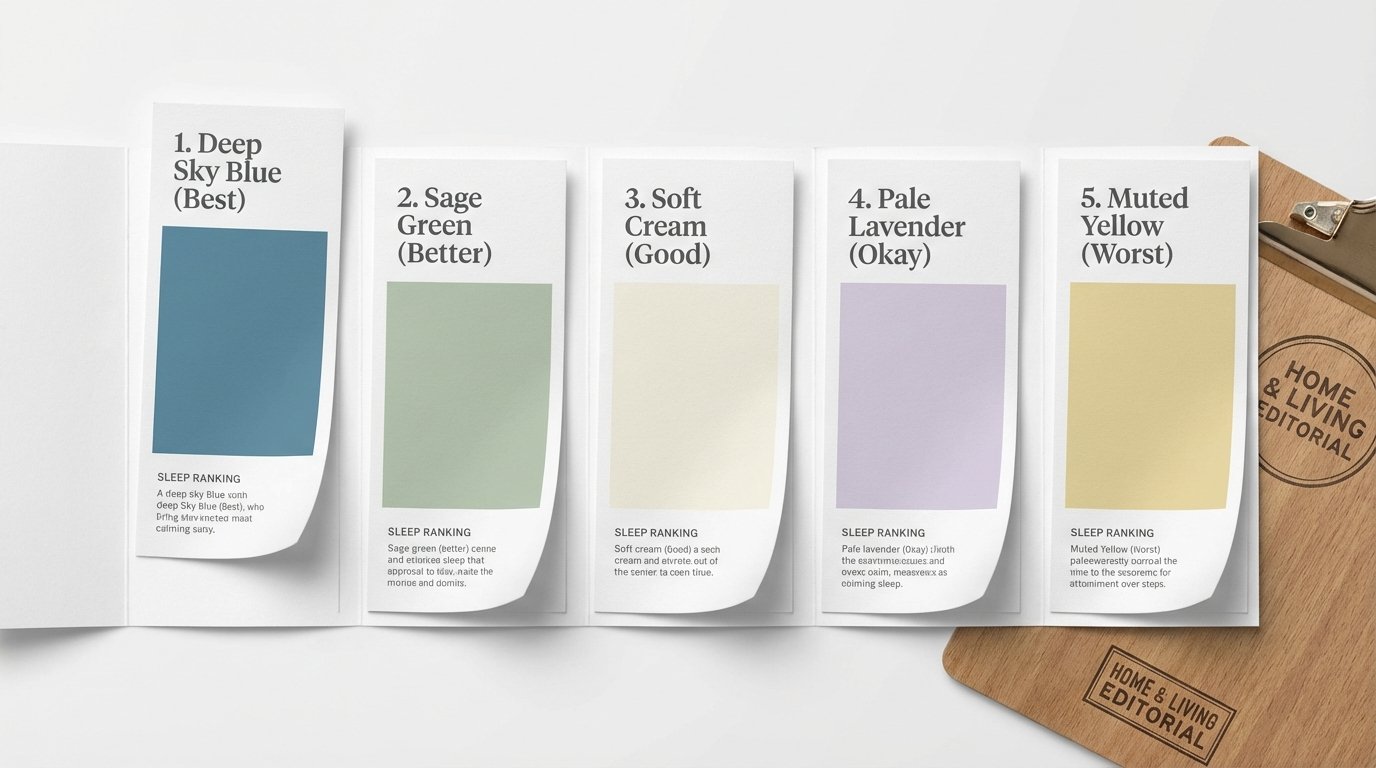
Image: 5 color swatches ranked — blue through yellow, with paint name labels. Clean, editorial.
You can use these same calming colors when creating a hotel-style bedroom for the ultimate sleep sanctuary.
Worst Bedroom Colors for Sleep (Avoid These)
Now for what NOT to do:
1. Bright Red
Red increases heart rate and blood pressure. It’s stimulating, not restful. Great for a dining room or home gym, terrible for a bedroom.
Why it fails: Red is the most stimulating color. It increases arousal and alertness — the opposite of what you want at bedtime.
2. Saturated Purple
Purple bedrooms had the WORST sleep in the Travelodge study — 5 hours 56 minutes average.
Why it fails: Saturated purple is over-stimulating and can cause mental unrest. The brain stays more alert than it should.
3. Bright Orange
Orange is energizing and cheerful. Perfect for a kitchen or workout space, terrible for sleep.
Why it fails: Orange increases oxygen supply to the brain and stimulates mental activity.
4. Stark White
Stark white isn’t harmful per se, but it feels clinical and cold. Most people sleep better with some warmth.
The fix: If you love white, choose a warm white like Benjamin Moore White Dove.
5. Dark Gray
Dark gray can feel oppressive in low light. Without other warm elements, it reads as gloomy.
The fix: If you want gray, choose warm greige instead. See how gray done right works in a living room.
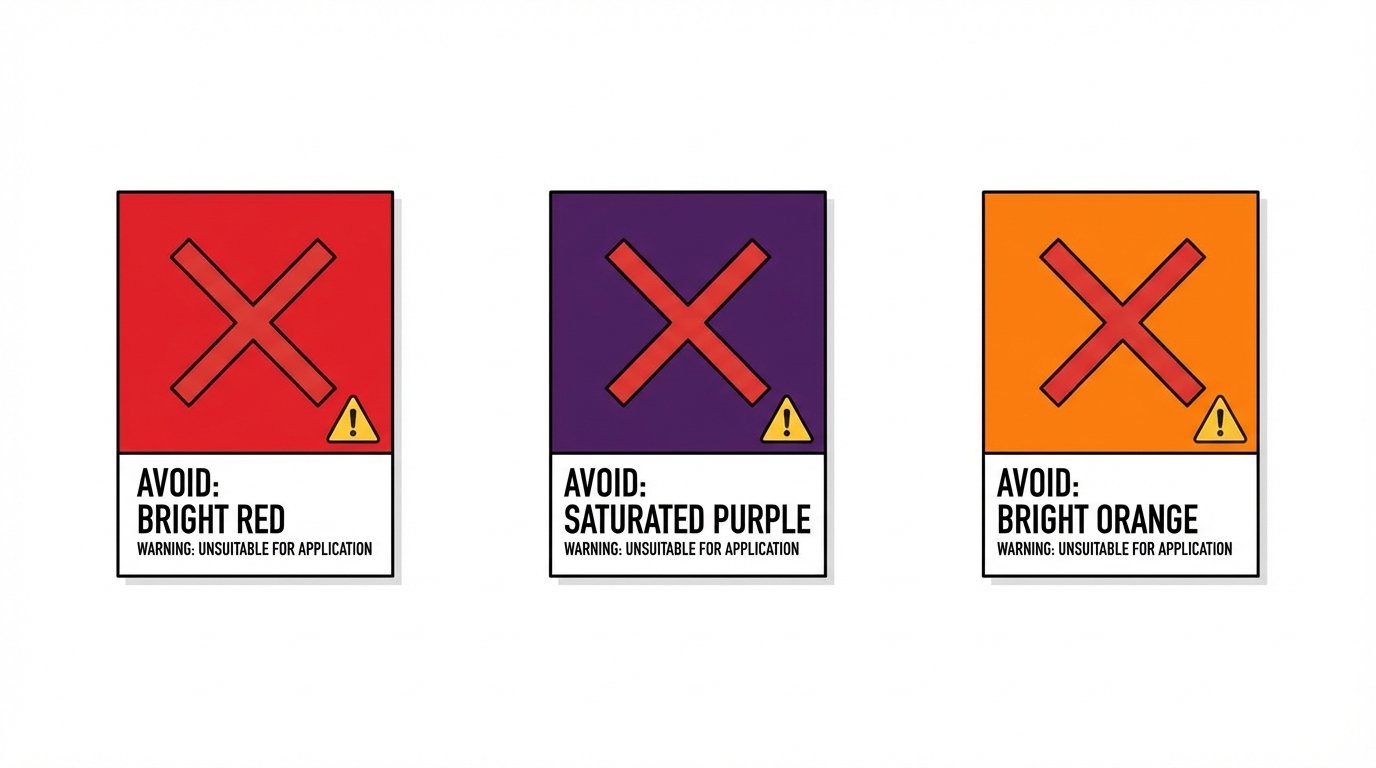
Image: “Avoid” color swatches — bright red, saturated purple, bright orange. With X marks.
> This doesn’t mean you CAN’T have red. It means don’t paint all four walls red. A red accent pillow is fine. A red room is sabotaging your sleep.
6 Complete Bedroom Color Palettes for Sleep
Each palette includes wall color, accent color, and textile recommendations with hex codes:
Palette 1 — Ocean Calm (Blue + Cream + White)
| Element | Color | Source |
|---|---|---|
| Wall | SW Sleepy Blue | #89A8B2 |
| Accent | Cream | #F5E6D3 |
| Bedding | White linen with blue throw | #FFFFFF |
Vibe: Coastal, serene, resort-like
Palette 2 — Forest Rest (Sage Green + Warm White + Wood)
| Element | Color | Source |
|---|---|---|
| Wall | SW Evergreen Fog | #9CAF88 |
| Accent | Natural wood, cream | #D4A96A |
| Bedding | Oatmeal linen with green pillows | #F5F0E8 |
Vibe: Nature-inspired, grounding, organic
Palette 3 — Cloud Neutral (Warm Cream + Soft Taupe + White)
| Element | Color | Source |
|---|---|---|
| Wall | BM White Dove | #F5E6D3 |
| Accent | Taupe, soft brown | #C4B5A4 |
| Bedding | All-white with textured throws | #FFFFFF |
Vibe: Clean, classic, universally restful
Palette 4 — Lavender Dream (Soft Lavender + Gray + Silver)
| Element | Color | Source |
|---|---|---|
| Wall | BM Organdy | #C5B9CD |
| Accent | Cool gray | #D3D3D3 |
| Bedding | Light gray duvet with lavender pillows | #C0C0C0 |
Vibe: Soft, dreamy, feminine
Palette 5 — Warm Dusk (Muted Navy + Warm Cream + Brass)
| Element | Color | Source |
|---|---|---|
| Wall | BM Hale Navy (accent wall only) | #3C4A63 |
| Other walls | Warm cream | #F5E6D3 |
| Bedding | Cream with navy throw | #B5854B |
Vibe: Sophisticated, cozy, cocoon-like
Palette 6 — Sunrise Soft (Muted Yellow + White + Wood)
| Element | Color | Source |
|---|---|---|
| Wall | BM Mannequin Cream | #EDE5BE |
| Accent | White, natural wood | #D4A96A |
| Bedding | White linen with warm-toned throw | #FFFFFF |
Vibe: Warm, inviting, gently cheerful
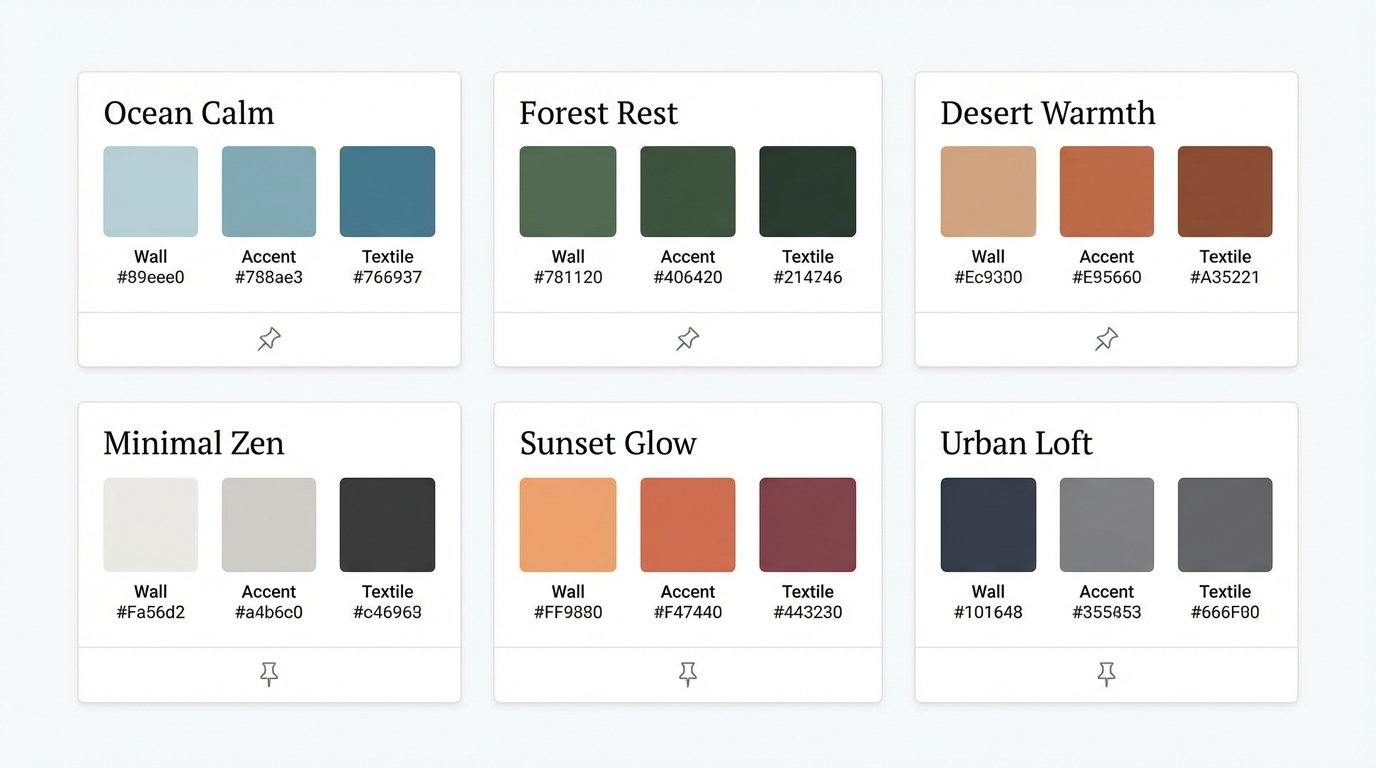
Image: 6 palette cards — each showing wall, accent, and textile colors. Clean, save-worthy.
These palettes also work beautifully with warm minimalism principles applied throughout your home.
Sleep Color Audit — Rate Your Current Bedroom
How does your current bedroom stack up?
| Question | Score 1-5 |
|---|---|
| Do your wall colors make you feel calm when you look at them? | /5 |
| Is the lighting warm (not harsh white)? | /5 |
| Are your textiles soft/neutral (not stimulating colors)? | /5 |
| Is the room dark enough for sleep? | /5 |
| Do you feel relaxed within 5 minutes of lying down? | /5 |
| TOTAL | /25 |
Scoring:
- Under 15: Your bedroom is fighting your sleep. Start with the wall color.
- 15-20: Good foundation, room for improvement.
- 21-25: You’re sleeping in a sanctuary.
How Light Changes Color (The Bulb Trick)
Here’s what nobody tells you: the same paint color looks completely different under different lighting.
Warm light (2700K): Makes blues softer and greens warmer
Cool light (5000K): Makes warm colors look muddy and blues look clinical
The rule: Always test paint samples under YOUR bedroom lighting.
Recommendation: Use warm bulbs (2700K) in bedrooms. They make sleep-promoting colors look their best.
This same principle applies to office lighting for video calls — light temperature affects how colors appear everywhere.
FAQ
What is the best color for a bedroom for sleep?
Blue is the best color according to research. People in blue bedrooms sleep an average of 7 hours 52 minutes per night — the longest of any color. Choose muted, dusty, or navy blue rather than bright primary blue.
What bedroom colors are calming?
Blue, green, and warm neutrals (beige/cream) are the most calming bedroom colors. These colors lower heart rate and blood pressure, promoting relaxation.
Is blue or green better for a bedroom?
Both are excellent choices. Blue has more research supporting its sleep benefits. Green is a close second and may feel warmer/less cold than blue in some spaces.
What is the worst color for a bedroom?
Saturated purple is the worst color for sleep according to research, with people averaging only 5 hours 56 minutes of sleep. Bright red and bright orange are also poor choices as they increase stimulation.
What paint colors are proven to help sleep?
Research-backed sleep-promoting paints include Sherwin Williams Sleepy Blue, Benjamin Moore Quiet Moments (blue), Sherwin Williams Evergreen Fog (green), and warm neutrals like Benjamin Moore White Dove.
What to Read Next
- How to Make Your Bedroom Feel Like a Hotel — Complete bedroom transformation guide
- Small Bedroom Layout with Queen Bed — Maximize your sleep space
- Guest Bedroom Essentials Checklist — Create a restful guest space
- Gray and Cream Living Room Ideas — Apply these principles to your living room