Warm Minimalism vs Cold Minimalism: Which Is Right for Your Home?
Minimalism used to mean one thing: white walls, empty surfaces, and a single sad plant on a concrete shelf.
But in 2026, there are actually TWO minimalism camps — and they look nothing alike.
One is warm, textured, and organic. The other is crisp, precise, and gallery-like.
This guide shows you both, helps you choose which is yours, and gives you the exact product picks to make it happen.
📌 Take the style quiz below — by the end, you’ll know exactly which minimalism fits your home.
The Style DNA — Warm vs. Cold Minimalism at a Glance
Here’s the fundamental difference between the two approaches:
| Element | Warm Minimalism | Cold Minimalism |
|---|---|---|
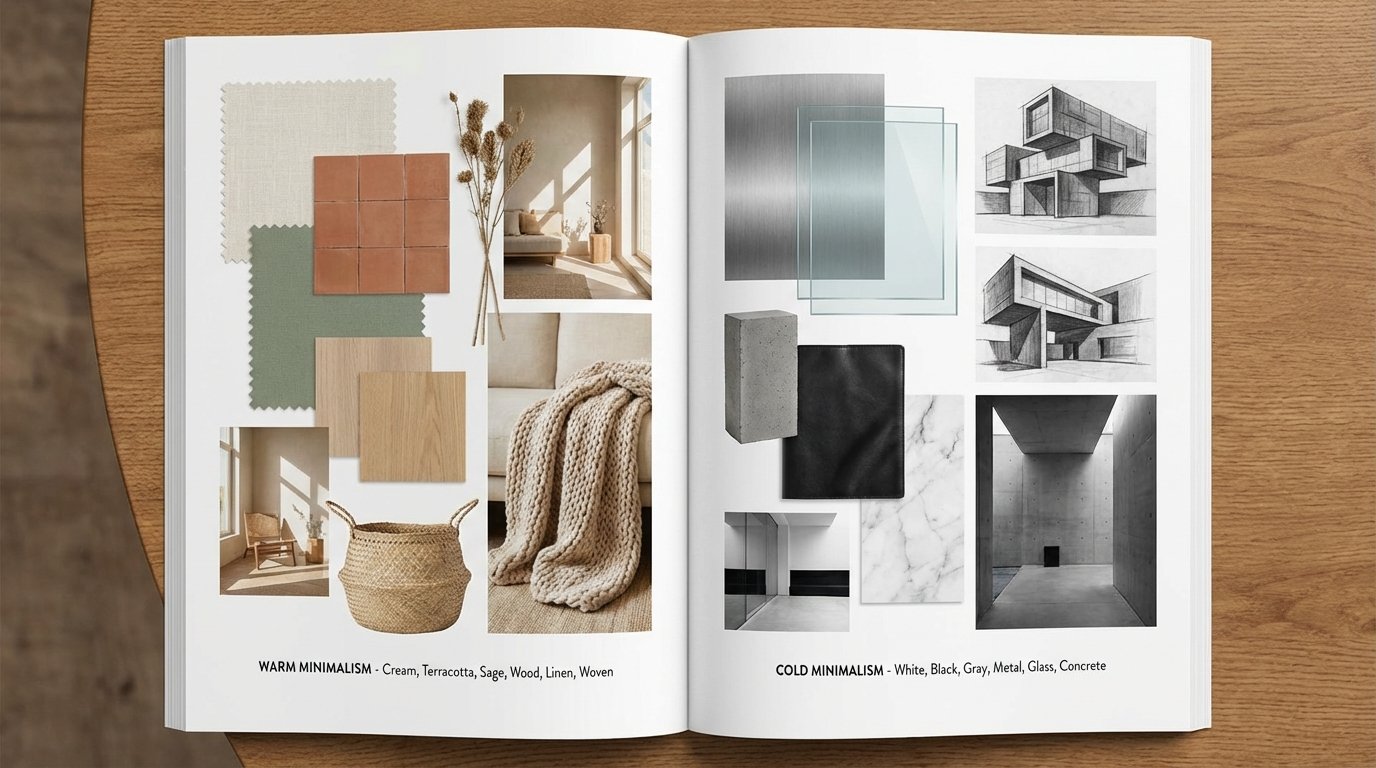
| Colors | Cream, beige, terracotta, sage, warm wood tones | White, black, gray, cool blue, steel |
| Materials | Natural wood, linen, wool, rattan, bouclé | Metal, glass, concrete, marble, lacquer |
| Textures | Lots — layered throws, woven baskets, visible grain | Minimal — smooth surfaces, clean lines |
| Lighting | Warm (2700K), multiple soft sources | Bright, even, architectural fixtures |
| Plants | Lush, varied, organic groupings | One statement plant, minimal greenery |
| Feel | “A Sunday morning at a cabin” | “A gallery opening in Copenhagen” |
| Mood | Cozy, grounded, inviting | Sleek, precise, sophisticated |
Warm minimalism is the dominant trend in 2026 — as we covered in our home decor trends 2026 guide — but cold minimalism has its devoted followers too. Neither is wrong. But one is probably YOURS.
Side-by-Side — Same Room, Two Treatments
Let’s see what this actually looks like in real rooms.
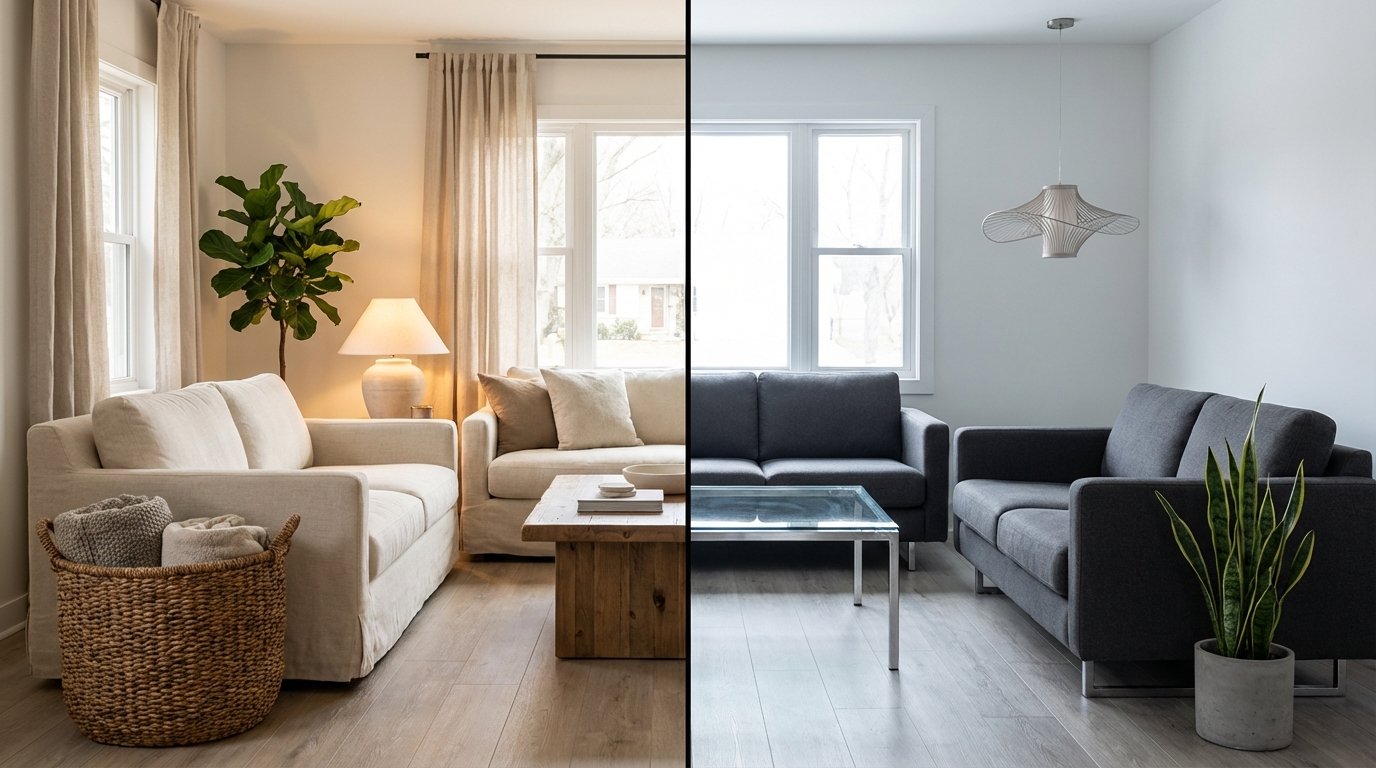
Living Room: Warm vs. Cold
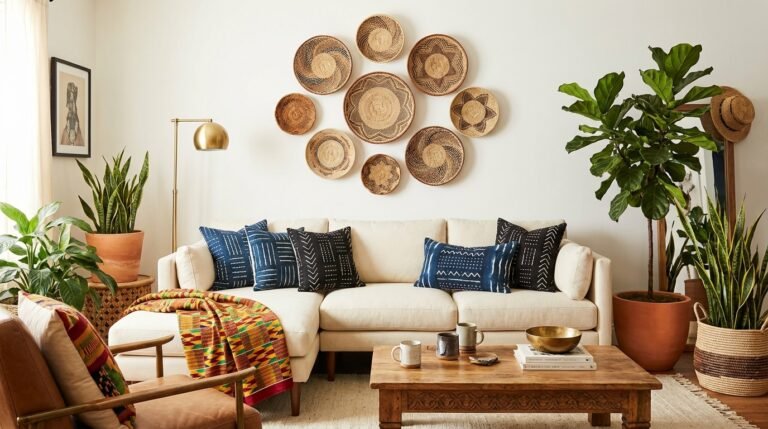
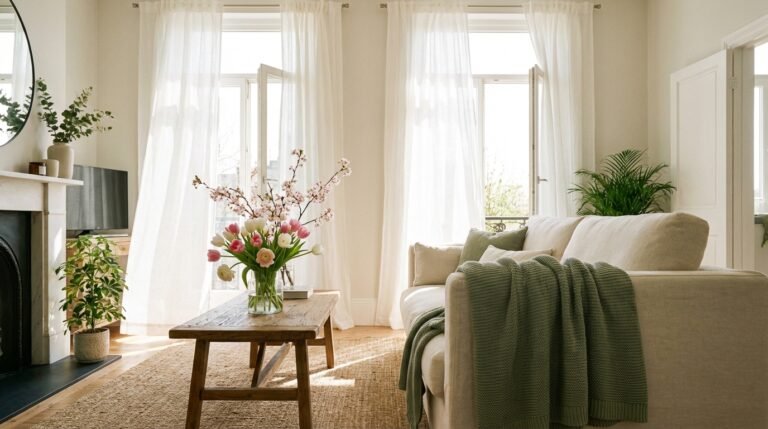
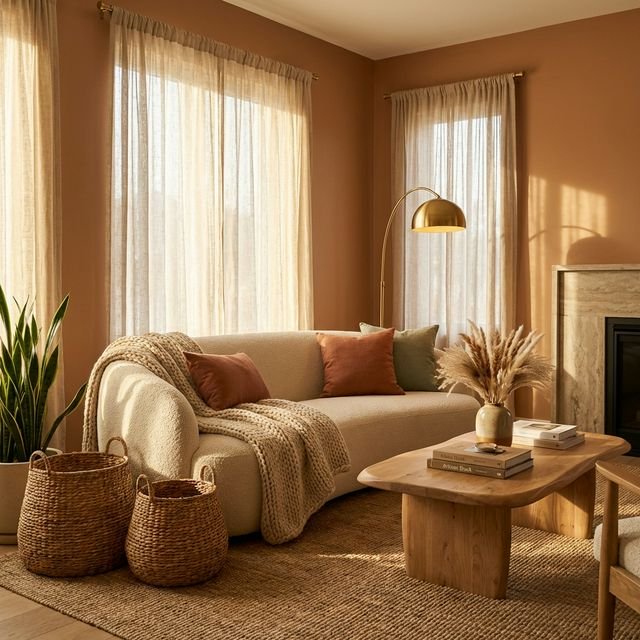
WARM Minimalist Living Room:
- Cream sofa (not white)
- Wood coffee table with visible grain
- Linen curtains that filter light softly
- Woven basket in the corner
- Fiddle leaf fig or statement plant
- Warm lamp glow from multiple sources
- A throw blanket casually draped
COLD Minimalist Living Room:
- Gray or white sofa (crisp, structured)
- Glass or metal coffee table
- No curtains or minimal white panels
- Single snake plant in a clean pot
- Architectural pendant light
- No throw blankets visible
- Sharp lines, zero softness
The same floor plan, completely different feeling. For more cozy inspiration, see our cozy living room ideas on a budget guide.
Bedroom: Warm vs. Cold
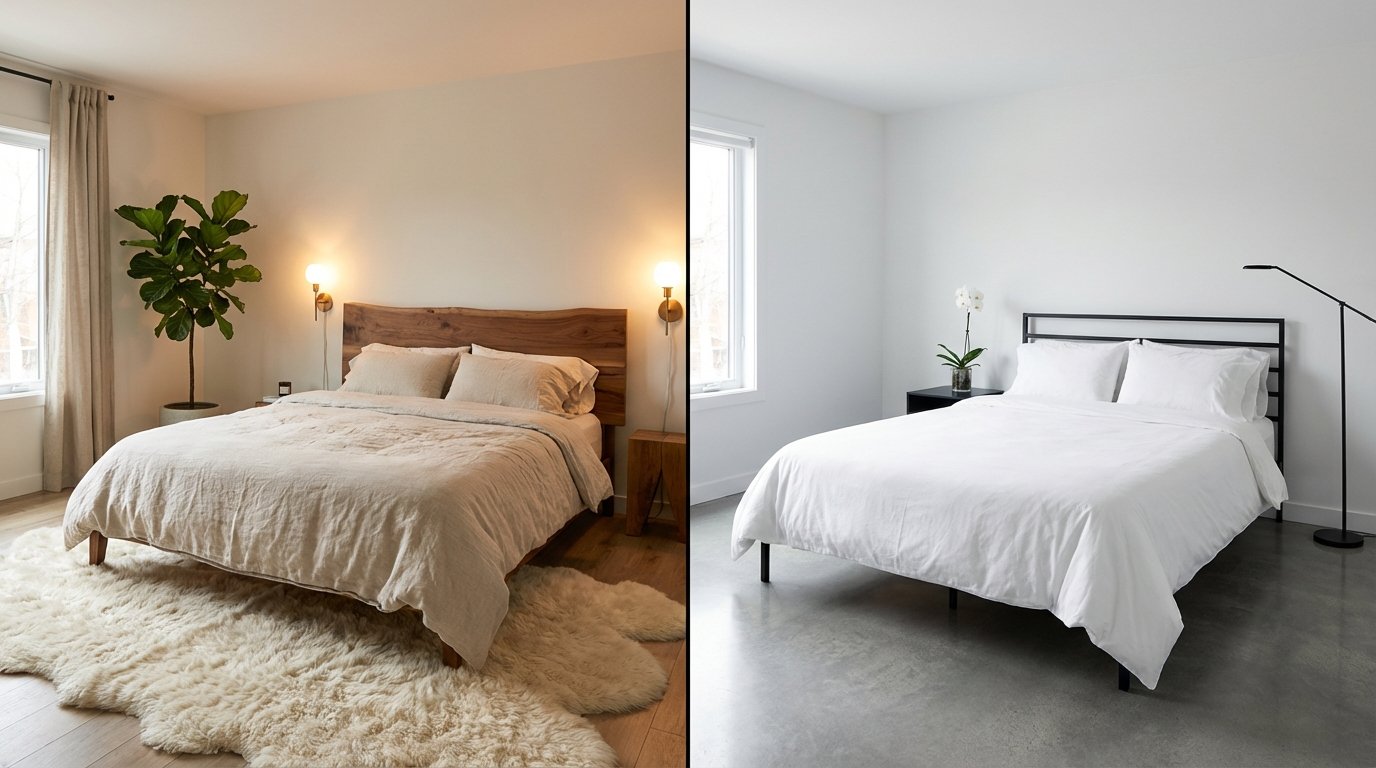
WARM Minimalist Bedroom:
- Linen bedding in oatmeal or cream
- Wood headboard (natural or light stain)
- Sheepskin or wool rug beside the bed
- Terracotta or ceramic pot with plant
- Warm sconces with soft light
- One textured throw at the foot
COLD Minimalist Bedroom:
- Crisp white bedding (hotel-perfect)
- Black metal or lacquer headboard
- No rug or minimal gray flatweave
- Single orchid or architectural plant
- Black reading lamp, sharp angles
- No throw, bed always perfectly made
Both are minimalist. Both are beautiful. But they feel completely different. For the full hotel-bedroom treatment, check out our guide to making your bedroom feel like a hotel.
Kitchen: Warm vs. Cold
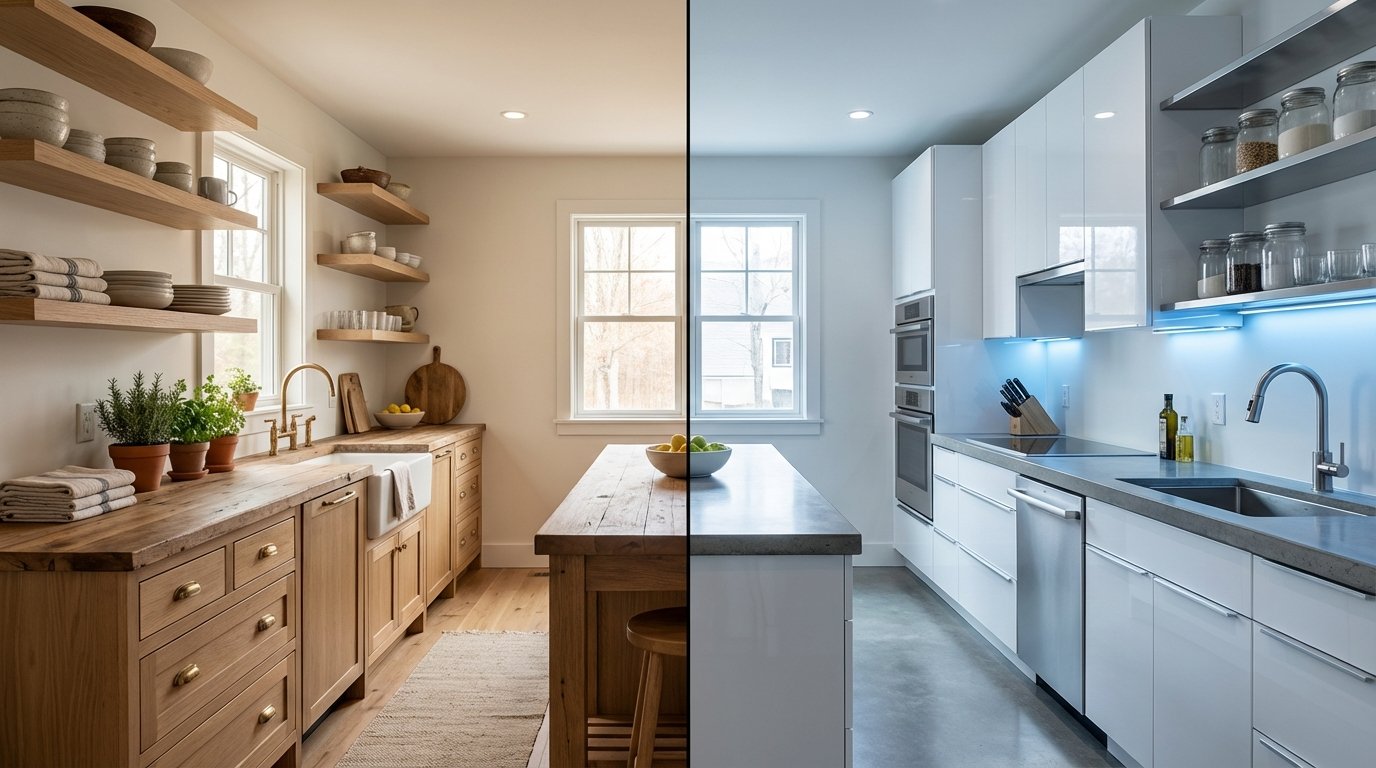
WARM Minimalist Kitchen:
- Wood open shelves with ceramic dishes
- Linen dish towels (not paper)
- Marble or wood cutting boards visible
- Herbs growing on the windowsill
- Warm brass hardware
- Stoneware and handmade touches
COLD Minimalist Kitchen:
- White lacquer cabinets, no hardware or minimal
- Stainless steel everything
- Glass jars for storage (identical)
- No visible clutter of any kind
- Under-cabinet LED lighting
- Clinical, pristine, almost unused look
The Quick Style Quiz — Which Minimalism Are You?
Answer these 5 questions honestly:
1. Your ideal Saturday morning is:
- A) Coffee in a linen robe, sunlight streaming through sheer curtains, soft music playing
- B) Espresso at a clean marble counter, checking email, ready to be productive
2. Your Pinterest home decor board is mostly:
- A) Wood textures, plants, ceramics, woven baskets, warm light
- B) Black and white photography, glass tables, metal accents, negative space
3. You’d describe your dream home as:
- A) A modern cabin in the woods — nature-meets-design
- B) A loft in Copenhagen — gallery-white and perfectly curated
4. The texture you’re most drawn to:
- A) Linen, wool, bouclé, natural wood grain
- B) Polished stone, smooth metal, glass, lacquer
5. Your vibe is:
- A) Cozy but curated — I want to sink in, not tiptoe
- B) Sharp and intentional — I want every object to earn its place
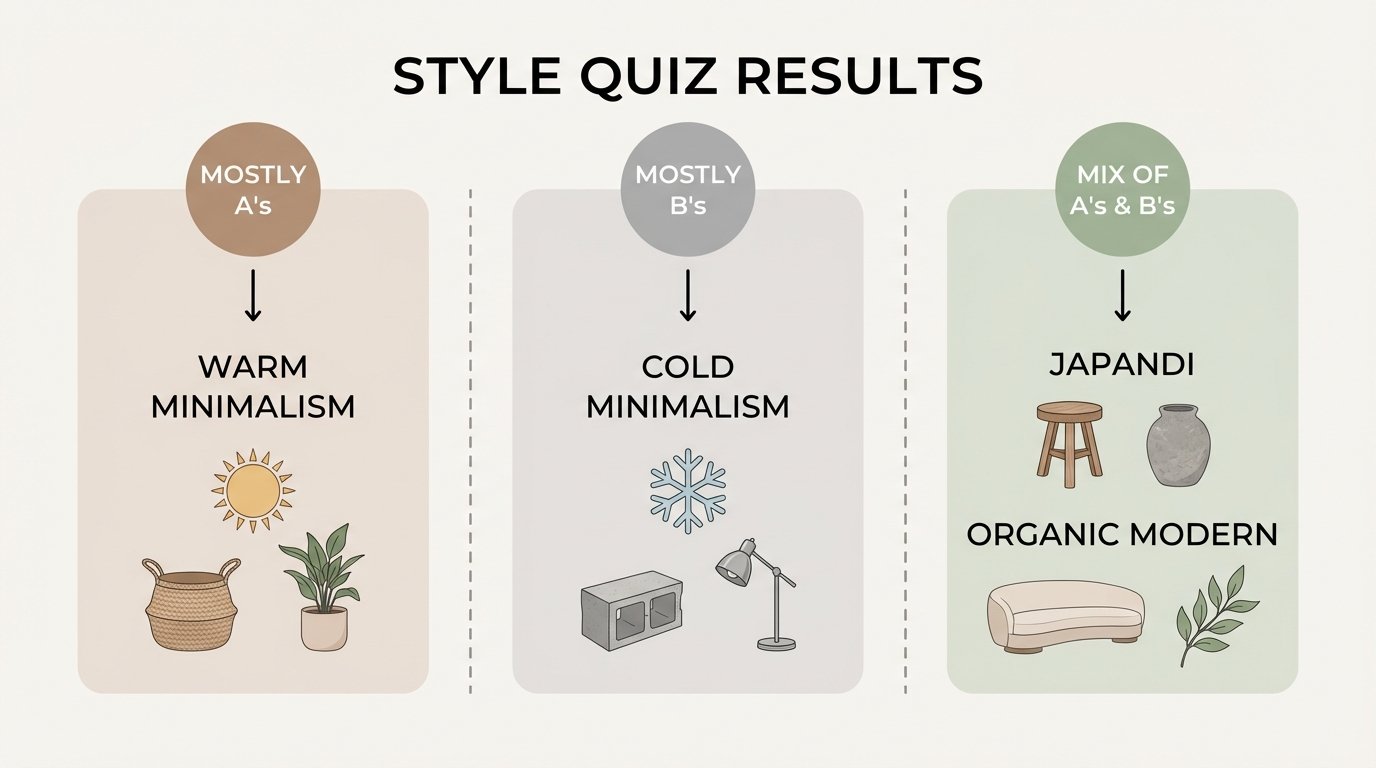
Mostly A’s: You’re Warm Minimalism. You want simplicity with soul.
Mostly B’s: You’re Cold Minimalism. You want precision with impact.
Mix of both: You’re a hybrid — see the “Mix & Match” section below.
Product Picks — Build Your Version
Warm Minimalist Starter Kit
| Item | What to Look For | Budget Pick |
|---|---|---|
| Throw blanket | Oatmeal or cream linen/wool blend | $22 |
| Pendant light | Rattan, bamboo, or warm brass | $35 |
| Rug | Jute, natural fiber, or warm wool | $45 |
| Vase | Ceramic, earth-tone, handmade look | $12 |
| Basket | Woven seagrass or natural fiber | $15 |
| Candle | Cedarwood, amber, or sandalwood | $10 |
Total starter kit: ~$140
Cold Minimalist Starter Kit
| Item | What to Look For | Budget Pick |
|---|---|---|
| Throw blanket | White or gray cotton (minimal texture) | $18 |
| Pendant light | Black metal, matte finish, or glass | $30 |
| Art | Black-and-white abstract or photography | $15 |
| Vase | Clear glass cylinder or black ceramic | $8 |
| Tray | Black marble or white lacquer | $20 |
| Candle | Unscented white pillar or minimalist vessel | $6 |
Total starter kit: ~$100
Both starter kits work with our budget home makeover under $500 plan if you’re transforming a whole room.
Can You Mix Them? (Yes — Here’s How)
You don’t have to pick a side. Many of the most beautiful spaces blend both. Here’s the formula:
Rule 1: Pick a Dominant (70/30)
- 70% warm + 30% cold = Japandi (Japanese minimalism meets Scandinavian design)
- 70% cold + 30% warm = Organic modern (crisp base, soft accents)
Don’t go 50/50 — it reads as confused, not intentional.
Rule 2: Use Temperature as Your Guide
- Warm tones + cold materials works beautifully (linen on a metal chair)
- Cold tones + warm materials also works (white walls with wood floors)
- Warm tones + warm materials = full warm minimalism
- Cold tones + cold materials = full cold minimalism
Rule 3: Anchor with One Constant
Choose either warm OR cold flooring and build from there. Wood floors? Lean warm. Concrete or white tile? Lean cold.
Two Hybrid Examples:
Japandi Style: Cold base (white walls, concrete floor) + warm accents (wood furniture, linen textiles, paper lanterns). This is the perfect bridge between both worlds.
Organic Modern: Warm base (cream walls, wood floors) + cold accents (black lighting, glass vases, metal frames). Contemporary but cozy.
For more on Japandi specifically, see our Japandi style room ideas guide.
Color Palettes (Save These)
Warm Minimalism Palette:
- Cream: #F5E6D3
- Sage: #B2C9AB
- Terracotta: #C1654C
- Oak: #D4A96A
- Warm white: #FAF7F2
Cold Minimalism Palette:
- Pure white: #FFFFFF
- Charcoal: #36454F
- Steel gray: #B0BEC5
- Black: #0B0B0B
- Cool blue: #A8B5C1
📌 Save these hex codes for your next project.
FAQ: Warm vs. Cold Minimalism
What is the difference between warm and cold minimalism?
Warm minimalism uses organic materials (wood, linen, wool), warm color palettes (cream, terracotta, sage), and layered textures to create a cozy, inviting feel. Cold minimalism uses industrial materials (metal, glass, concrete), cool color palettes (white, gray, black), and clean lines to create a crisp, gallery-like feel.
What is warm minimalism?
Warm minimalism is a design approach that keeps the simplicity and intentionality of minimalism but replaces sterile surfaces with organic textures, warm colors, and cozy materials. Think cream walls instead of white, wood instead of metal, linen instead of leather. It’s minimalism that you can actually live in comfortably.
Is warm minimalism a trend in 2026?
Yes — warm minimalism is the dominant interior design trend of 2026. After years of cold, all-white spaces, people are craving homes that feel warm and livable while still being uncluttered and intentional. Pinterest searches for “warm minimalism” and “Japandi” have increased significantly.
How do you make minimalism cozy?
Add texture (throws, rugs, baskets), use warm colors (cream, beige, sage), incorporate natural materials (wood, linen, wool), include plants, and use warm lighting (2700K bulbs). The key is keeping the visual simplicity of minimalism while layering in tactile warmth.
What colors are used in warm minimalism?
The core warm minimalism colors are cream, oatmeal, beige, terracotta, sage green, warm wood tones, and warm whites. Avoid pure white, cool gray, black, and anything with blue undertones. The palette should feel like nature — earthy, organic, sun-washed.
What to Read Next
- 👉 The opposite of minimalism: FunHaus decor — circus-inspired maximalism
- 👉 Another 2026 trend: Neo Deco interior design
- 👉 Maximalist exploration: Maximalist decor for beginners
- 👉 Full trend guide: Home decor trends 2026
📌 Take our “Which Minimalism Are You” quiz and save the Style DNA table — it’s the only comparison you need.